
DHS Proposes New Fees for F-1 Optional Practical Training
Oct 8, 2026 · @Luciane
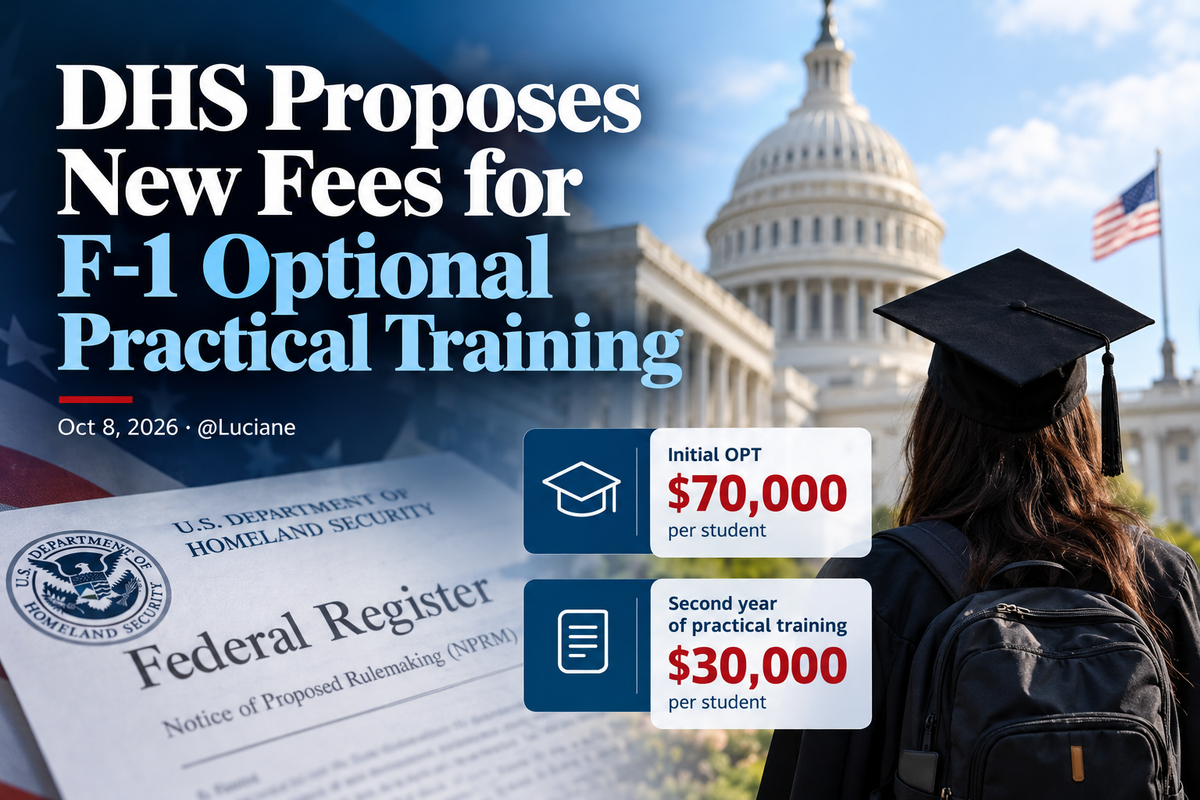
October 8, 2026 — The U.S. Department of Homeland Security (DHS) has published a Notice of Proposed Rulemaking (NPRM) in the Federal Register that would, if finalized, establish new fees for Optional Practical Training (OPT) for F-1 students. The proposal would impose a fee of $70,000 per student for initial OPT and $30,000 per student for a second year of practical training, with no further fees in subsequent years.
"This proposal would significantly change the cost of practical training for F-1 students," said Luciane Tavares, an immigration attorney at American Immigration Associates. "Because the rule is still at the proposal stage, students, schools and employers have the opportunity to review it closely and submit comments before DHS makes a final decision."
What the proposed rule would do
OPT, governed by 8 CFR 214.2(f)(10)–(11), permits F-1 students to obtain employment authorization for temporary work directly related to their field of study. Eligible students may currently receive up to 12 months of OPT per degree level, and students with qualifying STEM degrees may apply for a 24-month STEM OPT extension.
The NPRM, published in the Federal Register on October 8, 2026, would add two new charges on top of existing filing fees:
Period | Proposed fee |
Initial OPT | $70,000 per student |
Second year of practical training | $30,000 per student |
Subsequent years | No additional fee |
A student completing two years of practical training would pay a total of $100,000 under the proposed fee schedule. The proposal is not yet in effect and may change before any final rule is issued.
Open questions
Based on the notice issued by the Student and Exchange Visitor Program (SEVP), several questions remain that the full text of the NPRM may address.
- Statutory authority. Federal agencies may generally set fees to recover the cost of the services they provide. Whether DHS can justify charges of this size on a cost-recovery basis, or identify another source of authority, is a question commenters may raise.
- Scope of the second-year fee. The notice refers to a "second year of practical training." It remains to be confirmed how this applies to the 24-month STEM OPT extension and to students who change degree levels.
- Transition rules. It is not yet clear whether students currently on OPT, or with applications pending when a final rule takes effect, would be subject to the new fees.
- Who pays. The notice describes the fees as a charge "per F student." Whether employers may, or will be expected to, cover the cost is not addressed in the notice.
- Final rule process. Any final rule must meet the requirements of the Administrative Procedure Act, and its final terms may differ from the proposal.
What we are advising clients
"Those who may be affected should review the proposal and plan accordingly," said Tavares. "This is a proposal, not a final rule, and it may change after the comment period."
- Students eligible for OPT now should speak with their Designated School Official (DSO) about filing timelines. Filing a timely, complete application under current rules may matter if a final rule includes transition provisions.
- Students planning future study in the U.S. should factor the proposal into their budgeting and, where appropriate, explore alternative pathways such as Curricular Practical Training (CPT) or employer-sponsored visas.
- Employers that rely on international graduates should review their hiring pipelines and consider whether, and how, they would respond if fees are shifted to them.
- Universities should prepare to advise students and evaluate how the proposal could affect international enrollment.
Public comment period
DHS is required to consider every properly submitted comment before issuing a final rule, and may revise the proposal in response. Comments are most useful when they are specific and supported by relevant information.
- General comments on the proposed rule are due by November 9, 2026.
- Comments on the information collection described in the rule's Paperwork Reduction Act section are due by December 7, 2026.
Submission instructions are set out in the Federal Register notice. American Immigration Associates is assisting students, schools and employers in preparing comments.
About American Immigration Associates
American Immigration Associates is an immigration law firm that represents individuals, families, students and employers in a wide range of U.S. immigration matters, including student and visitor visas, employment-based immigration and consular processing.
Media contact: Luciane Tavares, American Immigration Associates
This release is for informational purposes only and does not constitute legal advice. Readers should consult an immigration attorney about their individual circumstances.